

Get calendar management right
Before syncing Google, Apple, and Outlook, you need to define how you want your time to look. Calendar management isn't just about merging dates; it's about creating a single source of truth that respects your priorities across different platforms.

Start by auditing your existing subscriptions. Remove old shared calendars, expired work invites, and duplicate feeds. If you keep every sub-calendar active, the sync process will become noisy and hard to debug later. A clean slate ensures that only relevant events flow between your devices.
Next, decide on your color-coding strategy. Assign distinct colors to work, personal, and family events before you begin importing. This visual separation becomes critical when conflicts arise or when you need to quickly scan your week across different apps.
Finally, back up your current calendars. Export your Google, Apple, and Outlook calendars to .ics files. This safety net allows you to restore your schedule if a sync error corrupts your data. With your backups safe and your structure defined, you are ready to start the import process.
Work through the steps
Cross-platform syncing works best as a clear sequence: define the constraint, compare the realistic options, test the tradeoff, and choose the path with the fewest hidden costs. That order keeps the advice usable instead of decorative.
After each step, pause long enough to check whether the recommendation still fits the reader's actual situation. If it depends on perfect timing, unusual access, or a best-case budget, include a simpler fallback.
Fix common mistakes
Calendar syncing usually fails because of hidden conflicts rather than broken software. The most frequent errors involve time zone mismatches, duplicate subscriptions, and conflicting event statuses. These issues create double-booked meetings or missing invitations across Google, Apple, and Outlook.
Time zone mismatches
When you import a calendar from a different region, the events shift to the wrong local time. This happens because the source calendar uses a fixed time zone while your local app adjusts automatically. If you live in New York but import a London-based schedule, the events will appear nine hours off. Always check the "Time Zone" setting in the subscription details before enabling sync. Set the calendar to your local zone or choose "No specific time zone" for all-day events only.
Duplicate subscriptions
Adding the same calendar link twice creates parallel streams of events. You will see every meeting twice, once from each subscription. This clutter makes it impossible to filter or delete duplicates easily. The fix is to audit your subscribed calendars regularly. Remove any entry that shows a redundant source or an older version of the same feed. Keep only one active link per calendar source.
Conflicting event statuses
When two platforms sync the same event, they may disagree on the status. One might mark a meeting as "confirmed" while the other shows "tentative." This conflict prevents the calendar from updating correctly. The solution is to prioritize one platform as the master. In Google, set the primary calendar to overwrite. In Outlook, ensure the main account is the default. This reduces the chance of status conflicts breaking your schedule.
Missing reminders
Sync errors often strip away custom reminders. You might set a 15-minute alert in Google, but it disappears when the event appears in Apple Calendar. This leaves you without notice for important deadlines. To fix this, add reminders in both platforms after syncing. Alternatively, use a universal reminder tool that integrates with both services. This ensures you never miss a meeting due to a sync gap.
Calendar management: what to check next
Here are the most common questions about keeping your schedule organized across platforms.
Helpful gear
Use these product recommendations as a starting point, then choose the size, material, and price point that fit how you actually use the gear.

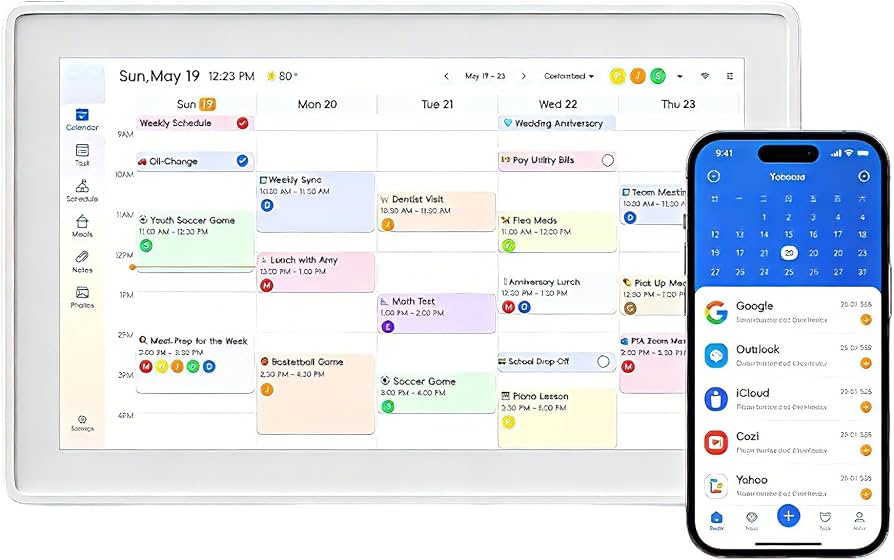
As an Amazon Associate, we may earn from qualifying purchases.
No comments yet. Be the first to share your thoughts!