
The problem with two calendars
Many people find themselves using both Apple and Google ecosystems. Maybe you have an iPhone for personal use but rely on Google Workspace for work, or perhaps your family uses Google Calendar for shared events while you prefer Apple Calendar’s interface. This creates a frustrating problem: managing two separate calendars and constantly switching between them.
Syncing the two calendars stops double-booking. It keeps your schedule in one place so you can see it on any device. This is mostly about making sure you don't miss a meeting because it was on the 'wrong' app.
The benefits extend beyond personal organization. Families can easily coordinate schedules, even if some members use iPhones and others use Android phones. Teams can collaborate effectively, even if their companies have standardized on different calendar platforms. It’s a practical solution for a mixed-device world.
Adding Google accounts to Apple devices
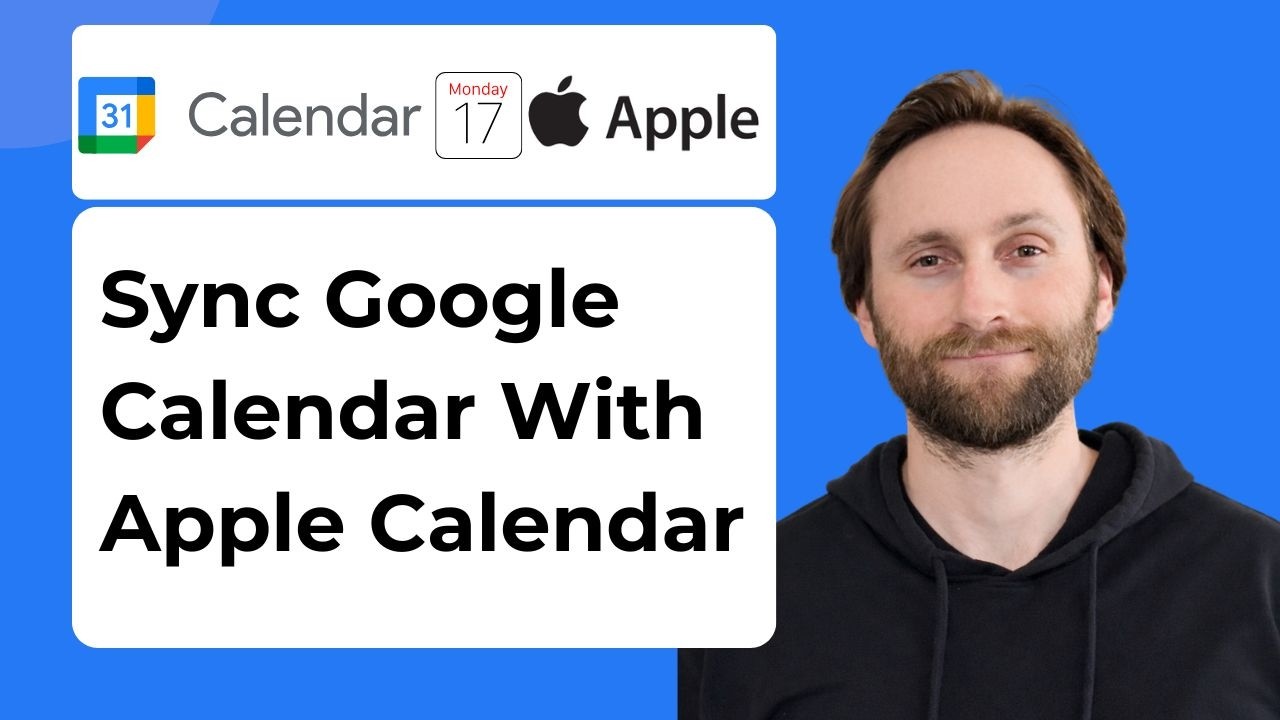
The simplest way to get your Apple Calendar events into Google Calendar is by adding your Google account directly to the Apple Calendar app. On your iPhone, iPad, or Mac, go to Settings (or System Preferences on a Mac), scroll down to Calendar, and tap "Accounts’. Then, tap ‘Add Account’ and select ‘Google".
You’ll be prompted to enter your Google account information. After logging in, you’ll be asked to grant Apple Calendar permission to access your Google Calendar data. Once authorized, your Google calendars will appear within the Apple Calendar app, listed alongside your iCloud and other calendars. You can toggle which Google calendars are visible.
This method isn't perfect. Syncing often lags, so events don't always show up instantly. If you change an appointment on your iPhone, it might take ten minutes to show up on the web. I've seen this happen most often with recurring weekly meetings.
To check the sync status, you can manually refresh the account in Settings/System Preferences. While this method is free and relatively easy, it’s often a starting point, and many users find they need a more robust solution for consistent synchronization.
Subscribing to Google feeds
You can add a Google Calendar to Apple Calendar as a subscribed calendar. This involves getting the iCal link from Google Calendar and importing it into Apple Calendar. In Google Calendar, navigate to the calendar you want to sync, click the three dots next to its name in the left sidebar, and select "Settings and sharing."
Scroll down to the "Integrate calendar’ section and copy the ‘Public URL"—this is your iCal link. Then, in Apple Calendar, go to File > New Subscription… and paste the iCal link. Apple Calendar will then add the Google Calendar as a read-only subscription.
The key limitation here is that this is a one-way sync. Changes made in Google Calendar will appear in Apple Calendar, but any changes you make to the subscribed calendar within Apple Calendar will not be reflected back in Google Calendar. It’s essentially a view-only copy.
This method is useful if you only need to see Google Calendar events in Apple Calendar and don’t plan to make edits within Apple Calendar. I’m not entirely sure how frequently Apple Calendar checks for updates to these subscribed calendars, so there might be a delay in seeing new or updated events.
Using third-party sync tools
When native syncing methods fall short, third-party services offer a more reliable and feature-rich solution. SyncGene (syncgene.com) is one such service specifically designed to sync Apple Calendar with Google Calendar. It promises two-way synchronization, meaning changes made in either calendar are reflected in the other.
SyncGene claims to avoid creating duplicate events and offers more control over the syncing process. You create an account with SyncGene and grant it access to both your Apple Calendar and Google Calendar. It then handles the synchronization in the background. The service is free for basic use, but they also offer paid plans with additional features.
Other services exist, though I haven’t personally tested them extensively. Some options include OneSync and Fruux. These services often provide similar functionality to SyncGene, but their pricing and features vary. It’s important to research and compare different options before choosing one.
Privacy is the main trade-off here. You are giving these companies full access to your schedule. Check their privacy policies to see if they sell data or just move it between accounts.
- SyncGene handles two-way syncing and tries to filter out duplicate entries.
- OneSync works with Google and Apple but also connects to other platforms.
- Fruux: Provides calendar synchronization and other automation features.
Apple Calendar & Google Calendar Sync Method Comparison (2026)
| Method | Sync Direction | Reliability | Customization | Privacy Considerations |
|---|---|---|---|---|
| Native Apple/Google Sync | One-way (Apple to Google) | Medium | None | Medium |
| Native Apple/Google Sync | One-way (Google to Apple) | Medium | None | Medium |
| Google Workspace Subscription (Shared Calendars) | Two-way | High | Limited | Medium |
| SyncGene | Two-way | Medium | Limited | Medium |
| Third-Party Sync Applications (General) | Two-way | Variable | Limited to Extensive | Variable |
Illustrative comparison based on the article research brief. Verify current pricing, limits, and product details in the official docs before relying on it.
Fixing common sync errors
Syncing issues are common, unfortunately. The most frequent complaint is that calendars simply aren’t syncing, or events are missing. First, verify your account settings in both Apple Calendar and Google Calendar. Make sure you’ve granted the necessary permissions to each app.
Next, check your internet connection. A stable connection is essential for syncing to work properly. Restarting your devices—iPhone, iPad, and Mac—can often resolve temporary glitches. Also, ensure that your time zone settings are correct in both calendars. Incorrect time zones can lead to events appearing at the wrong time or not syncing at all.
Duplicate events are another common problem. This can happen if you’re using multiple syncing methods simultaneously. Try disabling one method to see if that resolves the issue. If you’re still experiencing problems, consult the support documentation for Apple Calendar and Google Calendar.
Many users on the Apple Support Communities forum (discussions.apple.com) report success by toggling the calendar’s visibility on and off within Apple Calendar settings. YouTube tutorials (youtube.com) also suggest checking Google's calendar settings to ensure Apple Calendar is listed as an authorized app with full access.
Managing sync across devices
The syncing process is generally consistent across iPhone, iPad, and Mac, but there can be subtle differences. On iPhones and iPads, the syncing happens primarily through the built-in Calendar app and the system-level account settings. On Macs, you’ll manage syncing through System Preferences and the Calendar app.
iCloud Calendar can complicate things. If you’re heavily invested in iCloud Calendar, it’s essential to understand how it interacts with your synced Google Calendar. Events created in iCloud Calendar won’t automatically appear in Google Calendar unless you specifically share the iCloud calendar with your Google account—which is a separate process.
Conflicts can arise if you’re editing the same event in both iCloud Calendar and Google Calendar simultaneously. It’s best to choose one calendar as your primary editing source to avoid confusion. Regularly checking all your calendars is a good practice to ensure everything is in sync and accurate.
I've noticed that Macs sometimes take longer to reflect changes made on an iPhone, which is something to be aware of if you're actively managing your schedule on the go.
No comments yet. Be the first to share your thoughts!