
Why Syncing Apple and Google Calendars Still Matters in 2026
The simple truth is, people aren't living entirely within one tech ecosystem anymore. Some of us are deeply embedded in the Apple world with iPhones, iPads, and Macs, while others rely heavily on Google Workspace for work or personal organization. This creates a fundamental problem: how do you keep your schedule straight when it’s spread across different platforms? It's not a new problem, but it certainly hasn't gone away.
For many, the need for syncing is driven by practical considerations. Maybe you switched from Android to iPhone but still need to access your work calendar hosted on Google. Or perhaps you collaborate with colleagues and family who use different calendar systems. Maintaining a unified view of your commitments is essential for avoiding double-bookings and missed appointments. It’s about more than just convenience; it's about staying organized and professional.
Historically, syncing calendars across platforms has been a bit of a headache. Early solutions were often unreliable, slow, or required a lot of technical know-how. While things have improved, a truly seamless and dependable sync remains valuable. There's a real desire for a solution that just works, without constant monitoring or manual adjustments. I've tested the current methods to see which ones actually hold up.
Understanding Calendar Formats: iCal and Its Role
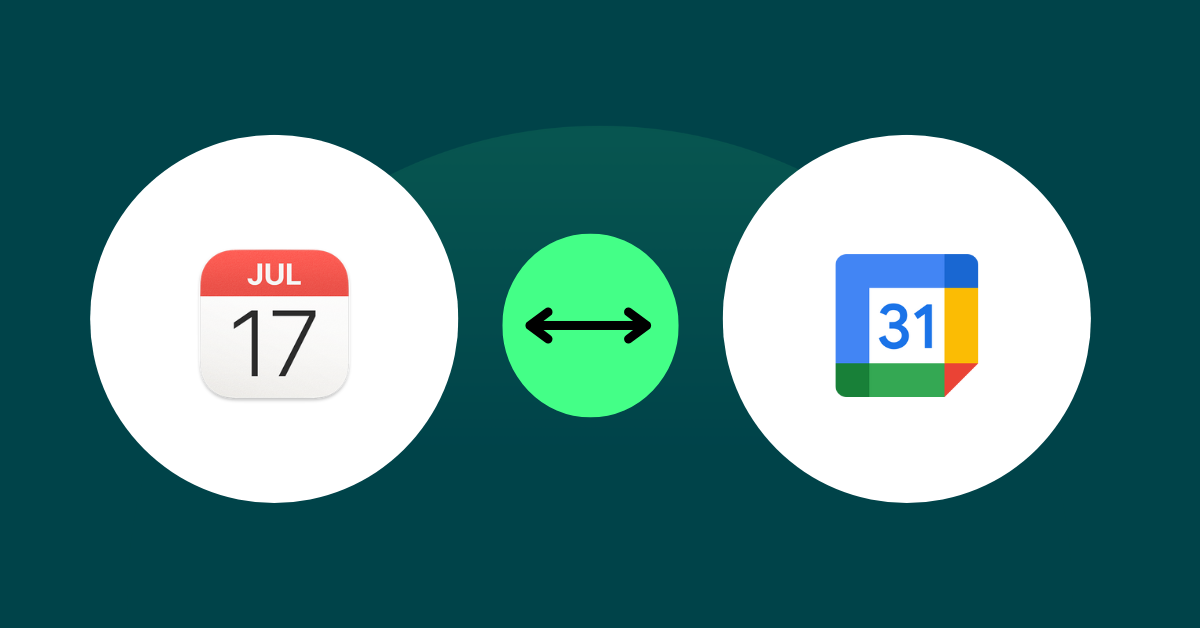
At the heart of calendar syncing lies a standard called iCal, or more formally, ICS (Internet Calendar Standard). This is essentially the universal language that calendars use to exchange data. Think of it like a translator allowing different systems to understand each other. Both Apple Calendar and Google Calendar utilize iCal under the hood to import and export events.
When you sync calendars, you're not directly connecting Apple and Google servers. Instead, each system is reading and interpreting iCal data. Apple Calendar can subscribe to an iCal feed provided by Google Calendar, and vice versa. This allows events to be displayed on both platforms, even though they originate from a single source.
iCal isn't a perfect solution. It excels at handling event details – time, date, location, attendees – but it’s less effective with more complex scheduling features like meeting polls or advanced reminders. It's a solid foundation, but it has limitations that can impact the syncing experience.
The Simplest Method: Subscribing to Calendars via iCal Links
The most straightforward way to get your Google Calendar events into Apple Calendar (and Apple Calendar events into Google Calendar) is by subscribing to a calendar using its iCal link. Google makes these links readily available. To find it, open Google Calendar, go to the calendar’s settings, and look for the "Integrate calendar" option. Copy the provided iCal link.
In Apple Calendar, click the '+' button at the bottom of the sidebar, then select 'Add Calendar…'. Paste the Google Calendar iCal link into the URL field and click 'Add'. The Google Calendar events will now appear in your Apple Calendar. The process is similar in reverse – you can create an iCal link for your Apple Calendar and subscribe to it from Google Calendar.
However, this method has significant drawbacks. It’s largely a one-way street. Changes made in Apple Calendar won't automatically sync back to Google Calendar. Also, updates aren’t instantaneous; there’s often a delay of several hours before events are reflected on the other platform. It’s a good starting point, but it’s not a true two-way sync. You're relying on Google to update the iCal feed, and Apple to check it periodically.
Here's a step-by-step guide for adding a Google Calendar to Apple Calendar: 1. In Google Calendar, go to Settings and select 'Integrate calendar'. 2. Copy the 'Public URL' (iCal format). 3. In Apple Calendar, click the '+' button, select 'Add Calendar…', and paste the URL. 4. Click 'Add'. The same process applies when adding an Apple Calendar to Google Calendar, although you'll need to generate an iCal link from Apple Calendar settings.
- In Google Calendar, go to Settings and select 'Integrate calendar'.
- Copy the 'Public URL' (iCal format).
- In Apple Calendar, click the '+' button, select 'Add Calendar…', and paste the URL.
- Click 'Add'.
Two-Way Sync Options: Third-Party Apps and Their Trade-offs
For a more robust, two-way syncing experience, you’ll likely need to turn to third-party applications. These apps act as intermediaries, constantly monitoring both your Apple Calendar and Google Calendar and synchronizing changes in real-time (or near real-time). Several options exist, but the apps change frequently.
The benefits of using a third-party app are clear: true two-way sync, faster updates, and often, additional features like conflict resolution and advanced scheduling options. However, there are trade-offs to consider. Many of these apps come with a subscription fee. Reliability can also be a concern – you're entrusting your schedule to another service, and outages or bugs can disrupt your workflow.
Privacy is another critical factor. Granting a third-party app access to your calendars means sharing your schedule data with another company. It’s vital to research the app’s security practices and privacy policy before entrusting them with your information. I'm not sure which third-party app is best right now because security policies change so fast.
Here’s a quick look at the pros and cons:
The cost can range from a few dollars a month to more substantial annual fees. It's a balancing act between convenience, cost, and trust. It’s worth carefully evaluating your needs and priorities before committing to a specific app.
- Pros: True two-way sync, faster updates, additional features.
- Cons: Cost, reliability concerns, privacy implications.
Popular Calendar Syncing Apps for Apple & Google Calendar (2026)
| App Name | Price | Sync Capability | Platform Support | Privacy Considerations | User Feedback |
|---|---|---|---|---|---|
| OneSync | Paid | Robust, reliable two-way sync | Apple ecosystem, Windows, limited web access | Generally considered good, focuses on local control | Mostly Positive |
| BusyCal | Paid | Excellent two-way sync with advanced features | macOS, iOS | Strong privacy focus, data stored locally | Positive |
| Akiflow | Paid | Two-way sync, integrates tasks alongside calendar | macOS, Windows, iOS, Android, Web | Privacy policy details data usage for integrations | Mixed – Feature rich, can be complex |
| Zapier | Free/Paid | Two-way sync via 'zaps' (automation workflows) | Web-based, connects thousands of apps | Privacy dependent on connected apps | Mixed - Reliability varies based on app connections |
| IFTTT | Free/Paid | Simple two-way sync through applets | Web-based, connects various apps | Privacy policy details data usage for connected services | Mixed - Can be unreliable for time-sensitive events |
| Cronofy | Paid | Developer-focused, two-way sync via API | Primarily for developers integrating calendar functionality | Designed for programmatic access, privacy depends on implementation | Generally Positive (among developers) |
Qualitative comparison based on the article research brief. Confirm current product details in the official docs before making implementation choices.
Leveraging Google's Built-in Apple Calendar Integration (and its Quirks)
Google offers a direct integration with Apple Calendar for iPhone and iPad users. This isn’t a full-fledged sync, but it allows you to view your Google Calendar events within the Apple Calendar app. To set it up, go to Settings > Calendar > Accounts > Add Account > Google. Follow the prompts to sign in to your Google account and enable calendar syncing.
This integration primarily focuses on displaying Google Calendar events within Apple Calendar. It doesn’t sync events created in Apple Calendar back to Google Calendar. It's a one-way view, designed for users who primarily use Apple Calendar but need to see their Google Calendar commitments. It’s a convenient solution for some, but it’s not a substitute for a true two-way sync.
Google's own documentation from 2024 confirms this feature only adds events to Apple Calendar; it doesn't sync them back. It’s important to understand this distinction. If you create an event in Apple Calendar, it will not appear in Google Calendar using this method. It’s a helpful addition, but it has limitations.
Troubleshooting Common Syncing Issues
Syncing issues are frustratingly common. One of the most frequent problems is events not syncing at all. First, double-check the iCal link. Is it still valid? Has the calendar owner changed the sharing settings? Also, verify that calendar syncing is enabled in your Apple Calendar and Google Calendar settings.
Duplicate events are another annoyance. This often happens when using multiple syncing methods simultaneously. Try disabling one method to see if it resolves the issue. Incorrect time zones can also cause discrepancies. Ensure that your time zones are correctly configured in both Apple Calendar and Google Calendar.
Conflicts can arise when the same event is modified on both platforms. Many third-party syncing apps have built-in conflict resolution features. If you're using the iCal subscription method, you may need to manually resolve conflicts by editing the event on one platform. Check app permissions – are the syncing apps authorized to access your calendars? Sometimes, resetting permissions can resolve syncing problems.
- Issue: Events not syncing. Troubleshooting: Verify iCal link, check syncing settings.
- Issue: Duplicate events. Troubleshooting: Disable redundant syncing methods.
- Issue: Incorrect time zones. Troubleshooting: Correct time zone settings.
- Issue: Conflicts. Troubleshooting: Use conflict resolution features or manual editing.
Advanced Considerations: Sharing and Permissions
Syncing calendars introduces complexities when it comes to sharing and permissions. If you share a calendar that’s synced between Apple and Google, the behavior can be unpredictable. Permissions granted on one platform may not translate directly to the other. For example, someone with 'edit' access on Google Calendar might only have 'view' access on Apple Calendar.
It’s crucial to understand how permissions are handled by each platform and by any third-party syncing apps you’re using. When sharing a calendar, it’s generally best to grant permissions directly on the platform where the calendar originates. This ensures that the permissions are consistently applied across all synced devices.
I’m not entirely sure about all the edge cases here, as the interaction between different platforms and syncing apps can be complex. However, a general rule of thumb is to keep your sharing and permission settings as simple as possible to avoid confusion and potential security issues.
What the Future Holds for Cross-Platform Calendar Syncing
Predicting the future is always tricky, but it's reasonable to expect improvements in cross-platform calendar syncing. Apple and Google both recognize the need for seamless integration, and it’s possible they’ll deepen their collaboration in this area. We might see more direct syncing features built into their respective operating systems.
Third-party apps will likely continue to innovate, offering more sophisticated features and improved reliability. The demand for a truly seamless syncing experience will drive competition and push developers to create better solutions. New standards for calendar data exchange could also emerge, simplifying the syncing process and reducing the need for intermediaries.
Ultimately, the goal is to create a world where your calendar is always up-to-date, regardless of the device or platform you’re using. While we’re not quite there yet, the progress made in recent years suggests that a truly seamless syncing experience is within reach.
No comments yet. Be the first to share your thoughts!